Food Diary
Two pages that change how you eat on GLP-1s. Page one tracks foods that sit well — your safe rotation. Page two logs what didn't work, how bad it was, and whether it's worth trying differently. Together, they become your personal food playbook.
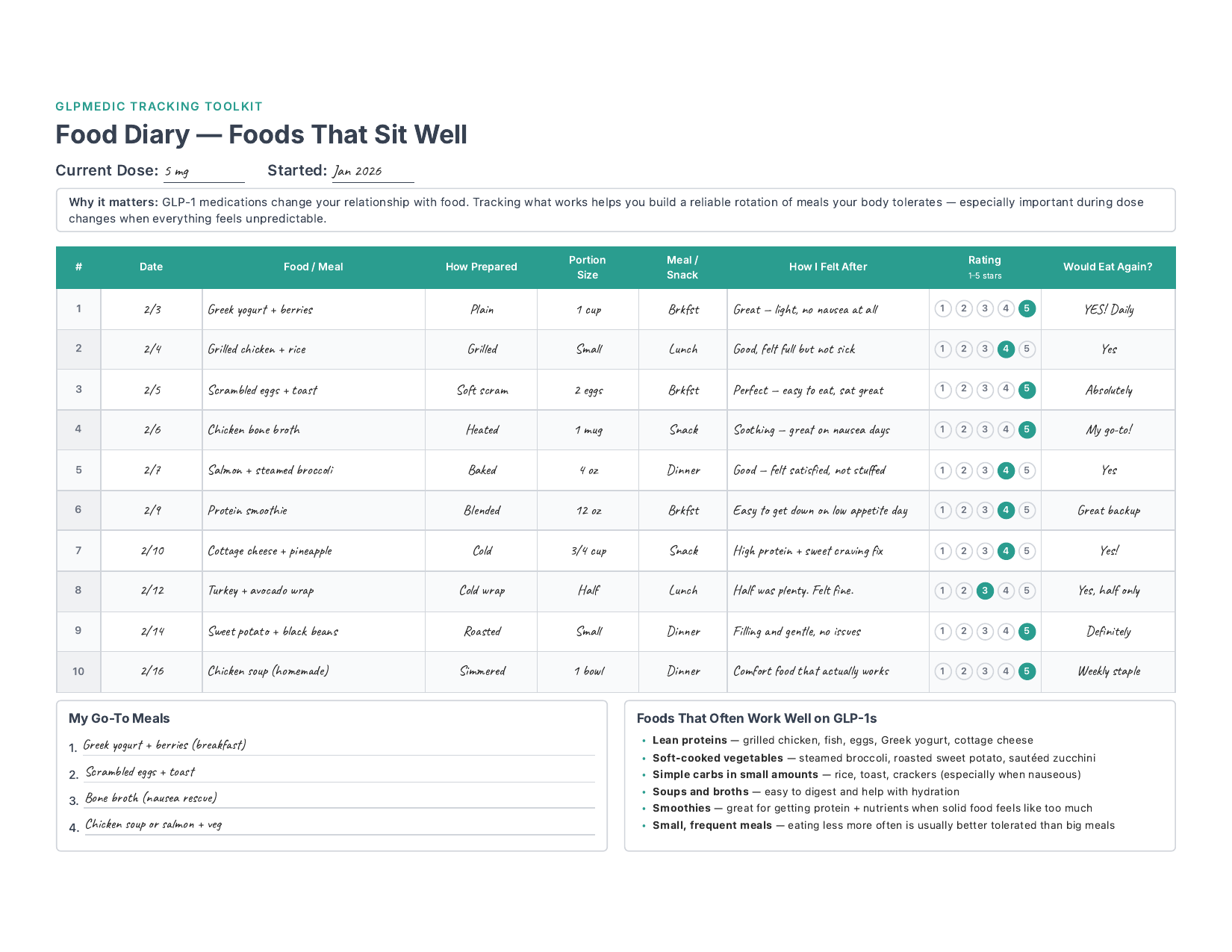
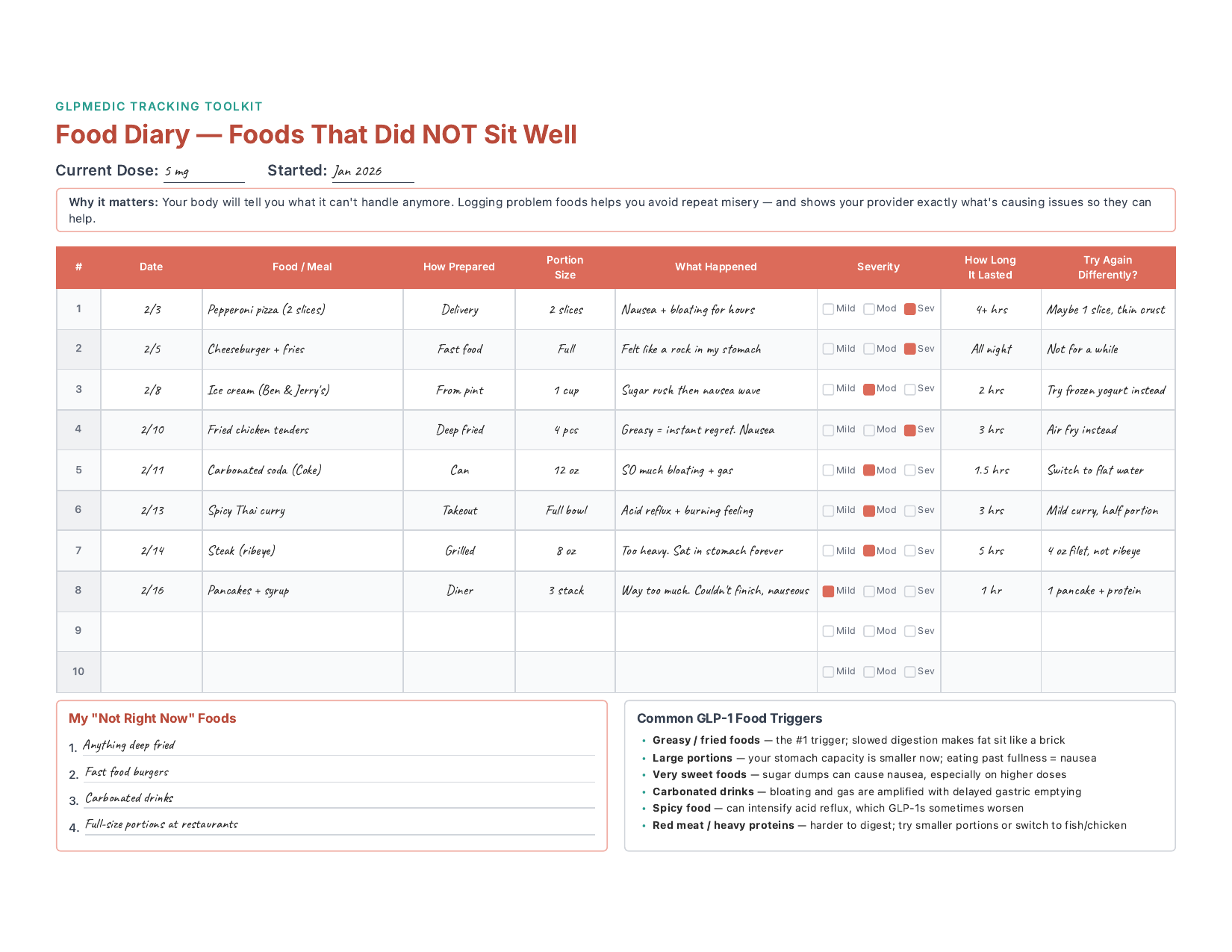
See it in action — two weeks of food tracking on 5mg Mounjaro. Page 1 builds a rotation of safe meals (Greek yogurt, bone broth, grilled chicken). Page 2 captures the lessons learned the hard way — pizza, fried chicken, and full-size restaurant portions are all on the "not right now" list.
What's Included
"Sits Well" Log + Ratings
Ten entries to track foods that worked — what you ate, how you prepared it, portion size, how you felt, and a 1-5 rating. Build your personal safe-food rotation over time.
"Did NOT Sit Well" Log + Severity
Ten entries for problem foods with what happened, severity (mild/moderate/severe), how long it lasted, and whether to try it differently. Learn from the bad meals so you don't repeat them.
Go-To Meals & Avoid Lists
Summary boxes on each page to record your winners and your "not right now" foods. Flip to these when you're deciding what to eat and your brain is drawing a blank.
GLP-1 Food Reference
Built-in guides on both pages — foods that typically work well on GLP-1s and common food triggers. No more guessing why dinner made you miserable.
The food thing caught me completely off guard. Foods I'd eaten my whole life suddenly made me feel awful — greasy stuff, big portions, anything fried. But I also discovered foods that felt amazing. Greek yogurt became my best friend. Bone broth on nausea days was a game-changer. The problem was, I kept forgetting what worked and what didn't, and I'd accidentally order the same thing that wrecked me two weeks earlier. This diary solves that. After a few weeks of filling it in, you'll have a personal food playbook that takes the guesswork out of every meal.
How to Use This Template
- 1 Print both pages and keep them together. They work as a pair — one for wins, one for lessons. Keep them in your binder or on the fridge.
- 2 Note your current dose at the top. Food tolerance often shifts when you titrate up. When you start a new dose, print fresh pages — what worked at 2.5mg might not work at 5mg.
- 3 Log foods as you discover them. Don't try to track every meal — just the standout wins and the notable failures. A few entries per week adds up fast.
- 4 Pay attention to the "Try Again Differently?" column. Sometimes the food isn't the problem — the portion or preparation is. A smaller serving or different cooking method might work fine.
- 5 Fill in your summary lists. Once you have a few weeks of data, write your go-to meals and avoid list. These become your quick reference when you're hungry and can't think straight.
Get the Full Tracking Toolkit
This template is just one of 23. The full bundle gives you everything you need to track your entire GLP-1 journey.
Daily & Weekly
- Daily Check-In
- Weekly View
- Weekly Reflection
- Habit Streaks
Health Monitoring
- Side Effects
- Injection Sites
- Body Measurements
- Blood Work
- Sleep
Progress & Milestones
- 8-Week Tracker
- 12-Week Dashboard
- Progress Charts
- NSV Tracker
- Clothing Timeline
Nutrition & Lifestyle
- Protein Tracker
- Meal Planning
- Food Diary
- Exercise Log
- Hydration
Planning & Reference
- Appointment Prep
- Medication Supply
- Cost Tracker
- Support Network
Bonus
- Free access to every future template — as the toolkit grows, so does your bundle. No extra cost, ever.
- Request custom templates — need something specific? Reach out to Brandon and he'll build it for you.